Is Analog Gear Still Relevant in a Digital World of Audio Production?
Debates over whether there is still value placed upon analog gear come more into play than ever in the digital audio world. Advances in digital technology seem to indicate most audio producers and engineers are either totally correct or wrong with their use of software and digital workstations. Despite such a change in this technology, analog gear is still widely believed to hold a specific place in today's audio production. Why? And how does the analog gear stand against its digital counterparts?
Let's find out in this post why analog equipment doesn't disappear in digital music production and sound engineering.
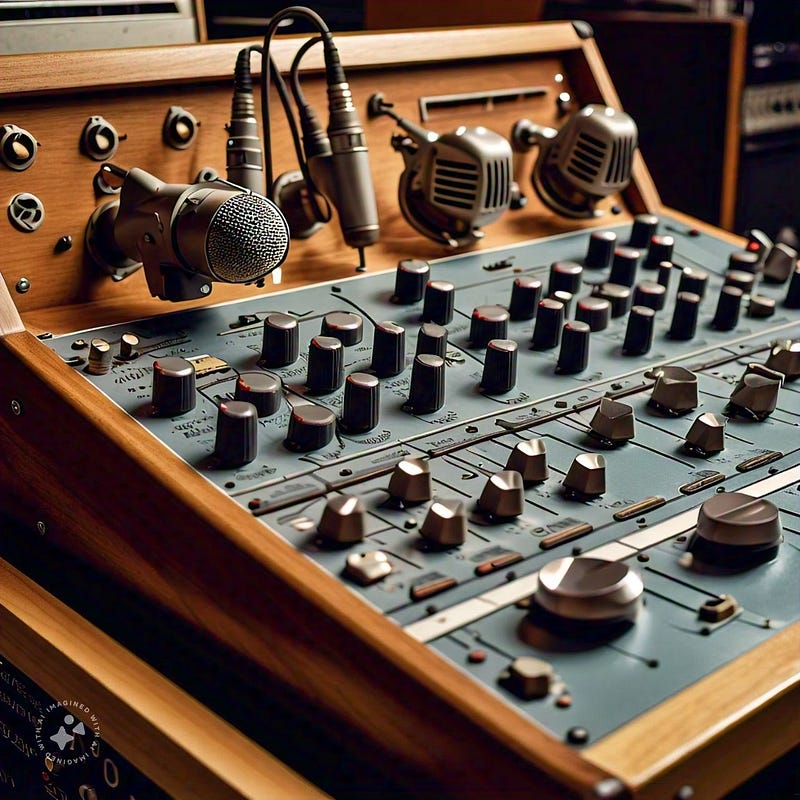
Why Analog Gear Is Still Relevant In The Digital Age
Analog gear refers to all the audio equipment; however, rather than using discrete data processing like digital systems use, it functions with continuous electrical signals. These include among others analog synthesizers, tape recorders, mixing consoles, equalizers, compressors and many more. They are things that have had such a long history-they go way back, decades ago-and despite this, people in the music industry still love them.
One of the most beautiful aspects of analog gear is that it is warm and has character. The harmonic distortion and soft saturation from analog equipment, if applied to audio, give it richness and texture that many digital systems can't match. For instance, an analog compressor on an audio signal sounds so much more musical and natural sometimes, with a quality depth and dimension that some digital models seem to miss.
In addition, analog gear lends one to a feel and touch that no digital setup can almost perfectly replicate. Using knobs, faders, meters on analog gear gives one a tangible, hands-on feel of the audio they're working on. It's not just about sound; it's also about process and emotional involvement in the craft. Many engineers and producers love working with analog gear quite simply because it requires focus and intention. It comes across as though one of the primary differences between digital and analog gear is that a digital interface allows you so much flexibility you can just endlessly fiddle and undo. Analog gear makes decisions with fewer alternatives, makes you decide rather decisively.
The Emergence of Digital Audio Workstations (DAWs)
DAWs, on the other hand, have presented and given a complete transformation in music creation, recording, and mixing in the digital age. DAWs are totally an all-in-one environment of audio recording, editing, mixing, and mastering; and everything is totally convenient, flexible, and precise. Also, the replication of the sounds by the producers with software plugins is possible and allows using the really high-quality results without the burden of this really expensive physical equipment.
For most producers, the first and best benefit of digital audio production is how efficient and cheap it really is. It lets you have multiple tracks on record, edit with a few clicks, and apply a whole array of effects and processing in real time-again, all within an easy-to-use interface. Similarly, the use of ease of recall sessions and saving different versions has led to more streamlined and accessible digital production for creators of all genres.
The digital world also gives the producer an almost infinite range of plugins and virtual instruments. Plugins can emulate the behavior of analog gear in startling accuracy, providing producers with the warmth and coloration of analog devices without the encumbrance of needing to physically possess these units. High-quality digital emulations of analog gear are also incredibly popular among audio engineers, especially those who want the sound but do not want to spend expensive money or maintain expensive physical units.
The Hybrid Approach: Analogue and Digital Mixed Bedding
While digital tools continue to grow in importance, many within the audio industry do not necessarily view the world of analog and digital as two separate, mutually exclusive points. One very recent trend has been hybrid: the idea of using both analog and digital systems together to yield the best qualities from each. In that configuration, audio engineers may record and mix in a digital environment but incorporate analog gear at various stages of the process.
For instance, analog compressors and equalizers could be utilized for processing tracks recorded beforehand into a DAW. That would leave the producer with the ability of capturing the warmth of analog equipment while still in possession of the flexibility and precision associated with digital editing. Likewise, some studios will incorporate analog tape machines for their distinct colorations and may apply them during the final mixing or mastering phases to characterize the audio tracks.
The hybrid approach recognizes the fact that, although digital instruments are extremely powerful, analog kits do, of course, have a certain sonic quality and organic sound many creatives desire. This combination allows room for a decision that permits audio professionals to make an informed choice, giving them the best of both worlds; ease and precision with digital but the warmth and character with analog.

Analog Value in Today's Production Landscape
It may not come as a surprise that virtually every aspect of music production has been altered forever by the advent of digital audio. Yet, there are many reasons to believe that analog gear remains pertinent to this day. In the first place, such analog equipment simply continues to offer a level of sound quality difficult to attain with purely digital systems. Those imperfections and harmonic distortions that come along with analog gear often make recordings more pleasing and authentic, especially when doing vintage recording techniques. For the kind of music like rock, jazz, and anything that needs the "live" sound, it has the energy and spontaneity that the analog equipment picks up that cannot be picked by the digital tool.
Moreover, analog gear can also be very educational. Now, analog equipment, practically speaking, offers beginners a very practical way of understanding the basics of audio processing, and gets them hands on with the manipulation of dynamics. By doing so, it forces the listener to engage with the music on a rather more profound level, thus developing an ear for the nuances of mixing and recording. While software plugins can indeed be something of a convenience, learning to understand and manipulate real-world hardware really creates a more grounded and authentic approach to audio production.
The Lasting Allure of Analog Gear in the Age of the Digital Realm
Even if digital dominance prevails with respect to accessibility and cost-effectiveness and flexibility, something special remains in regards to analog gear that has music professionals preferring it. Whether it is the warmth of an analog synth, punch of a tube compressor, or the vintage sound of a tape machine, analog gear has this tactile, organic quality that digital tools really struggle to emulate. So, for producers, musicians, and engineers who hold such things dear, this art factor of analog gear remains part of the creative process.
In a world dominated by software for music production, there are those who still follow the analog side of things, driven more by a want for something more, that which digital tools cannot all quite match up to. And while we are living in a digital world, that's not to say that it's disputed that analog does have that special place in the hearts of many.
Looking to add some analogue gear to the rig, or just interested in some hybrid production? Well, you're in luck. There are tons of fantastic places to shop for high-quality gear, and shops like VIP PRO AUDIO offer the perfect combination of new and used gear that can make injecting a little warmth into your digital workflow easier than ever. Whether you need a retro compressor, a vintage analog synth, or other analog staples, these shops offer a choice of gear that suits every pocket..jpg)
.png)
.jpg)
Comments
Post a Comment